Boutique Hotels in Kenya vs. International Chain Hotels: Which Stay Truly Belongs to the Place?
The Hotel Decision That Quietly Decides What Kind of Holiday You Will Have
Most travellers spend weeks choosing flights and minutes choosing where to sleep, yet the hotel is the one decision that touches every single hour of a trip. It shapes what you eat, who you speak to, how quickly you slow down, and whether you return home with photographs or with memories. In Kenya, where the distance between a glass-fronted city tower and a coral-stone house on a quiet island can feel like two separate countries, that choice matters more than almost anywhere else.
The debate around boutique hotels in Kenya vs. international chain hotels is not really about thread counts or lobby size. It is about two different philosophies of hospitality: one built on consistency and scale, the other built on character and connection. Both have genuine strengths, and the honest answer is that the right choice depends entirely on why you are travelling.
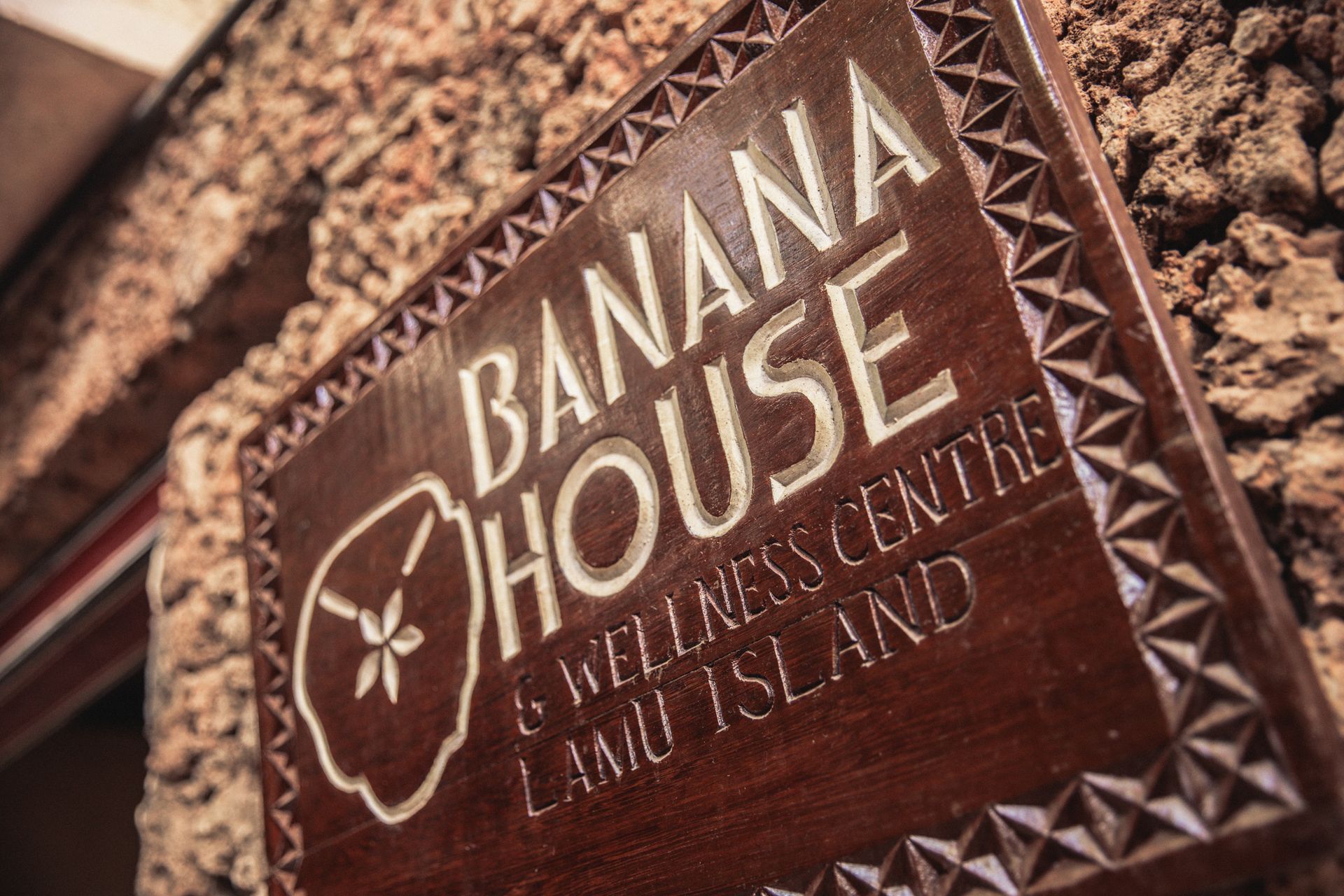
We write this from Banana House & Wellness Centre, a small boutique hotel and wellness retreat in Shela village on Lamu Island. We are, admittedly, on one side of the comparison. But we also host guests who arrive from Nairobi business hotels, who fly in after safari lodges, and who have loyalty cards for every major global brand. Those conversations have taught us a great deal about what each type of stay does well, and where each one falls short.
Boutique Hotels in Kenya vs. International Chain Hotels: Defining the Difference
A boutique hotel is usually independently owned, small in scale (often fewer than thirty rooms), and designed around a specific place, idea or atmosphere rather than a corporate template. No two rooms need to match. The architecture tends to reflect local building traditions, the menu reflects local produce, and the people who greet you are frequently the people who built the place.
An international chain hotel belongs to a global group such as Hilton, Marriott, Accor, Radisson or Kempinski, operating under brand standards that are replicated across continents. The value proposition is predictability: a known room layout, a known breakfast buffet, a known check-in process, loyalty points that accumulate across countries, and a corporate reservations system that handles bookings at scale.
Neither model is inherently superior. A chain hotel is engineered to remove surprises, while a boutique hotel is designed to create them. The question is simply which of those two outcomes you want from your Kenyan trip.
What Makes Boutique Hotels Kenya Travellers Love Feel Different
The first difference most guests notice is scale. In a two-hundred-room property you are, inevitably, one of many. In a small property you are recognised by the second morning, your coffee arrives the way you like it without asking, and the person arranging your dhow trip is the same person who served you dinner last night. That continuity is not a luxury add-on; it is the entire product.
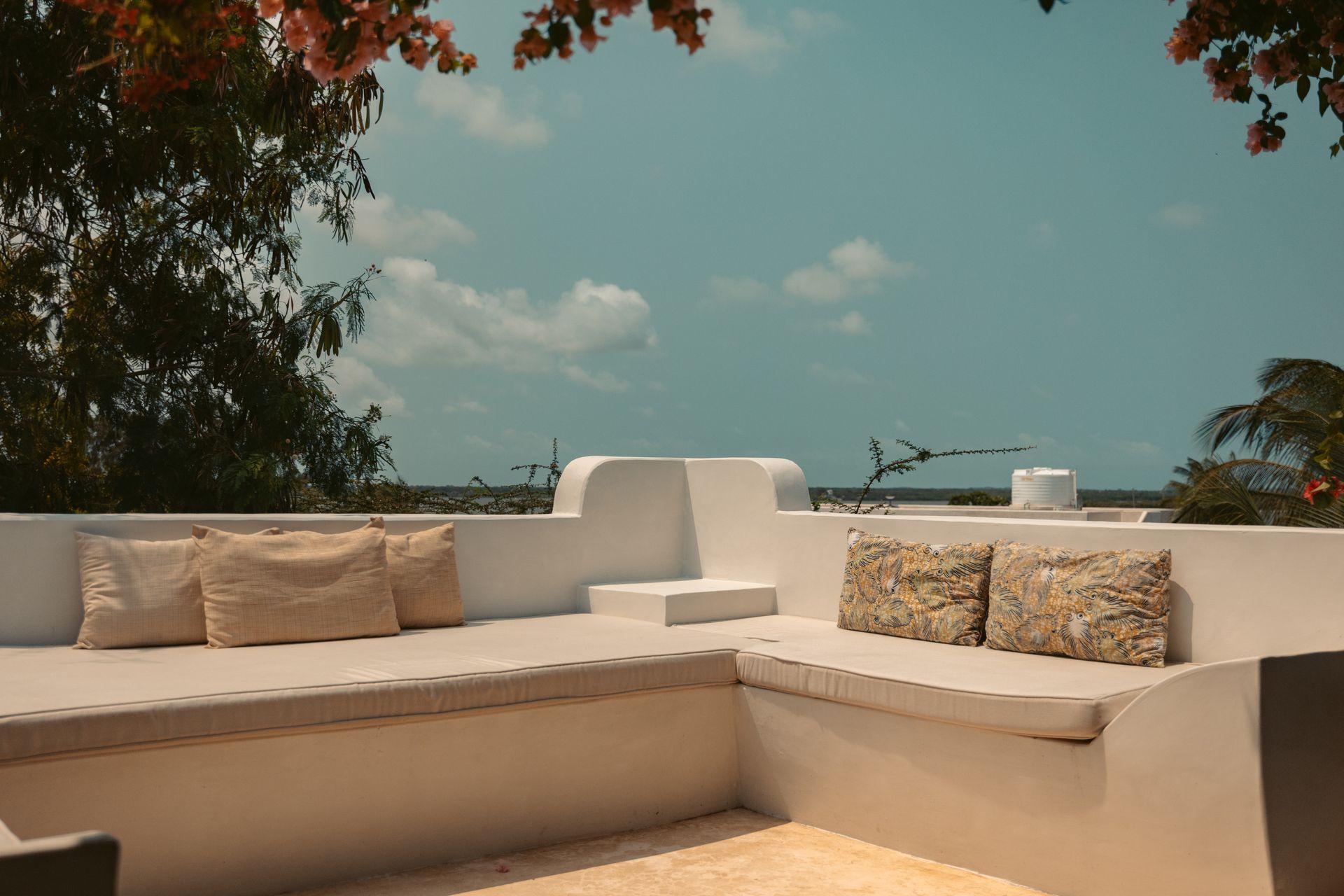
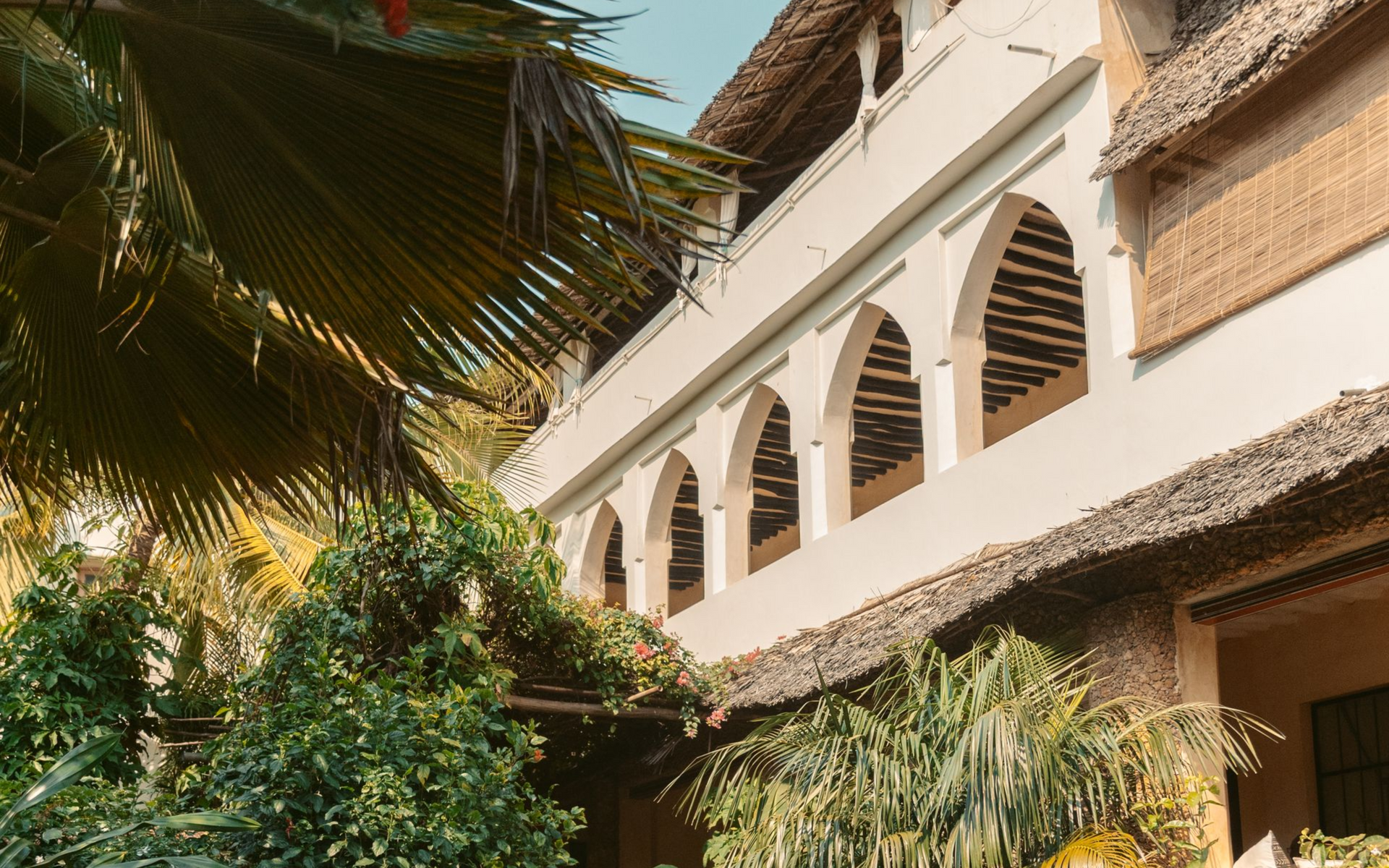
The second difference is design rooted in place. Luxury accommodation Kenya is known for at the boutique end often borrows directly from regional architecture: Swahili coral and lime plaster on the coast, carved makuti roofing, open courtyards built to catch sea breezes rather than rely on air conditioning. These buildings feel cooler, quieter and more considered because they were shaped by the climate they sit in, not shipped in from a design manual.
The third difference is food. Large kitchens serving hundreds of covers must standardise, which usually means predictable buffets and imported ingredients. At our hotel, meals are cooked fresh each day using local ingredients from our garden and surroundings, and our chefs are happy to adapt dishes to different tastes, dietary needs and spice preferences. It is a smaller operation by necessity, and that smallness is exactly what allows the flexibility.
The Genuine Advantages of International Chain Hotels in Kenya
It would be unfair to pretend that global brands do not do certain things exceptionally well. For business travellers arriving late into Jomo Kenyatta International Airport with an early meeting in Upper Hill or Westlands, a chain hotel offers reliable airport transfers, twenty-four-hour service, conference facilities, business centres and a room that functions identically to the one they used last month in Dubai or Johannesburg.
Loyalty programmes also carry real financial value for frequent travellers. Points earned across a year of corporate trips can fund a family holiday, and elite status brings upgrades, lounge access and late checkout that boutique properties simply cannot replicate because they do not operate global networks.
Scale brings other benefits too: large gyms, multiple restaurants, extensive meeting space, and the reassurance of a recognisable complaints and compensation process. For conferences, diplomatic travel, corporate groups and anyone who prizes certainty above atmosphere, the international chain remains the sensible choice. Kenya's hospitality sector has grown accordingly, with international brands continuing to expand in Nairobi and Mombasa alongside independent properties, something reflected in the national tourism strategy published by the Kenyan Ministry of Tourism and Wildlife.
Location Tells You Almost Everything About the Experience Ahead
Geography quietly separates these two categories. International chain hotels cluster where corporate demand concentrates: Nairobi's central business district, Westlands, Gigiri, Upper Hill, the airport corridor and the larger beach resort strips. These are efficient, well-connected locations designed around meetings, flights and group logistics.
Boutique hotels tend to sit where character concentrates instead: Karen's leafy gardens, the Masai Mara conservancies, the forested edges of Watamu, the quieter stretches of Diani, and the island villages of the Lamu archipelago. You trade some convenience for immersion, and for many travellers that trade is the entire point of coming to Kenya in the first place.
It is worth being practical here. If your itinerary is built around boardrooms, choose proximity to them. If your itinerary is built around sunsets, silence, swimming and long unhurried breakfasts, choose proximity to those instead.
Lamu Hotels and Shela Accommodation: Boutique Hospitality at Its Most Distinctive
Lamu is perhaps the clearest illustration of why small luxury hotels Kenya offers cannot be replicated by global brands. Lamu Old Town is the oldest and best-preserved Swahili settlement in East Africa and is inscribed on the UNESCO World Heritage List, a status that protects its narrow streets, carved doors and centuries-old building traditions. There are no cars on the island. Donkeys and dhows do the work that traffic does elsewhere.
That context makes conventional chain development almost impossible, and the result is an island where nearly all places to stay in Lamu are independently run houses, guesthouses and boutique properties. Shela village, a short walk or boat ride from the old town, has become the natural home of Lamu accommodation for travellers who want beach access, quiet lanes and genuine Swahili architecture. We explain why in more detail in our guide to eight reasons Shela is one of the best places to stay in Lamu.
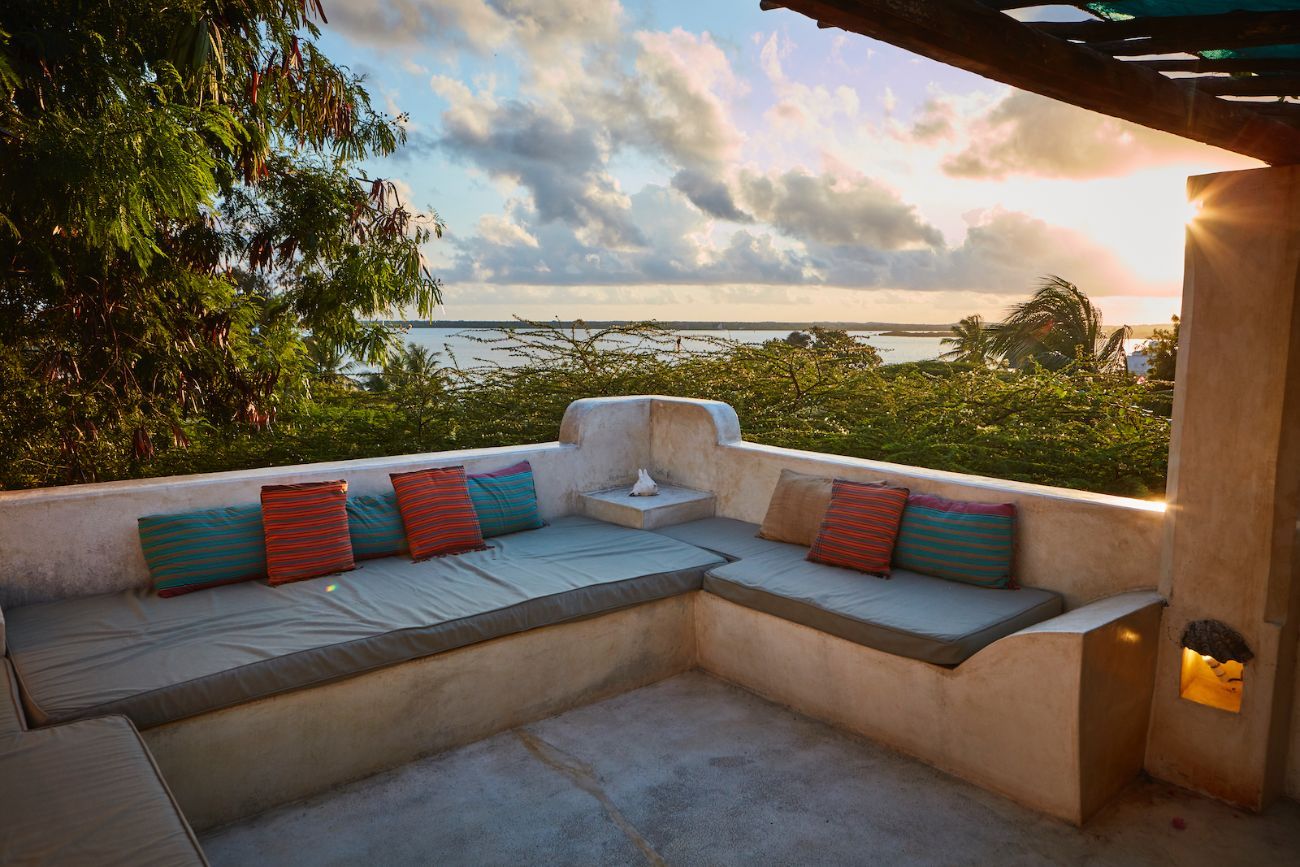
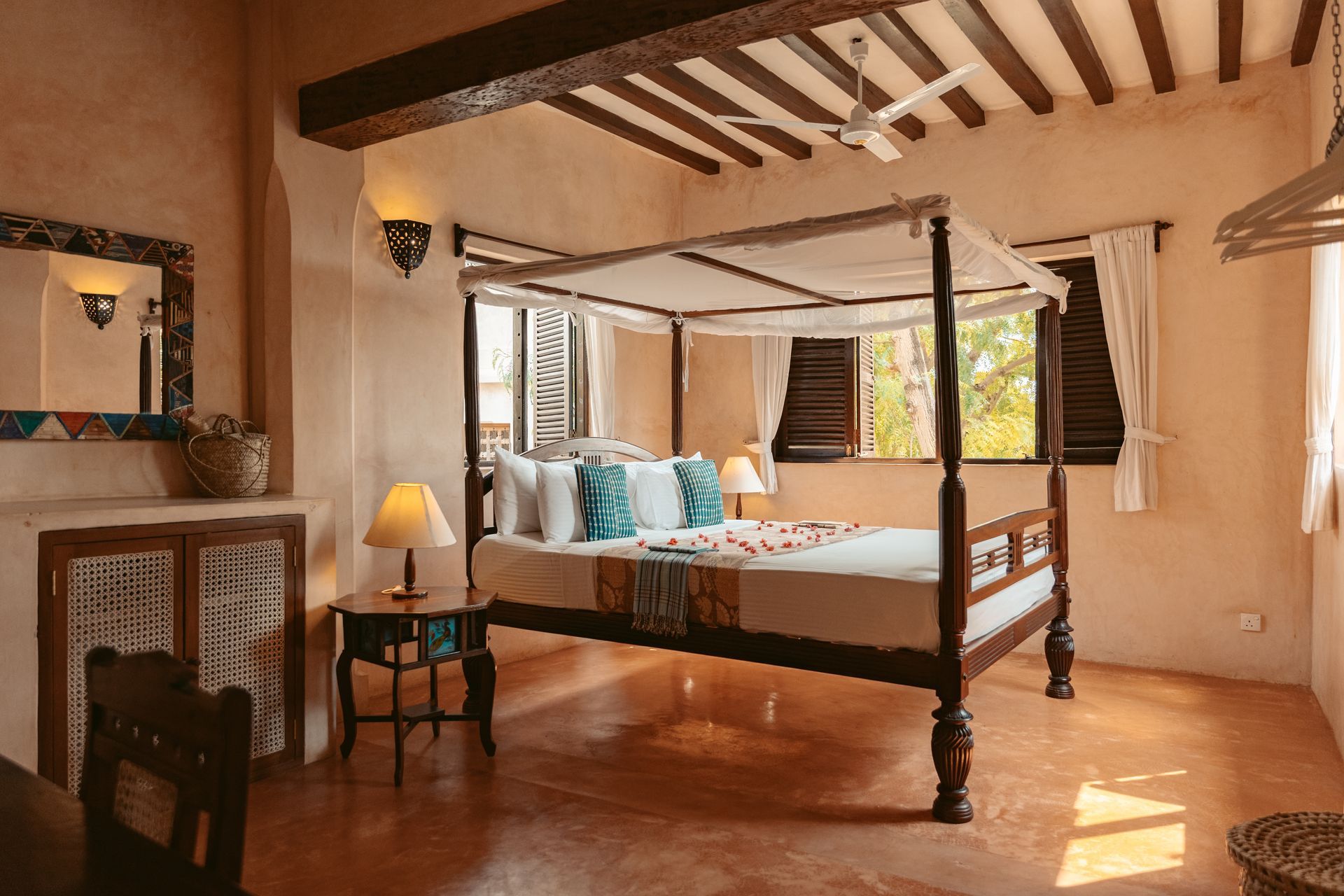
A boutique hotel Lamu guests remember is rarely the one with the biggest lobby. It is the one with the rooftop where the call to prayer drifts across the dunes at dusk, the pool shaded by palms, and the staff who know which dhow captain to call when the wind is right. Our own rooms are built in traditional Swahili style with open terraces and sea breezes, and you can browse our rooms and suites to see how differently space works on the island.
Wellness Travel: Why a Yoga Retreat Kenya Delivers Suits the Boutique Model
Wellness is where the gap between the two models widens most noticeably. A chain hotel spa is typically a revenue centre: a treatment menu, a gym, perhaps a scheduled class. A wellness retreat Kenya travellers return to year after year tends to be something else entirely, a rhythm built into the property rather than bolted onto it.
Daily yoga in an open studio, meals designed around fresh local produce, no traffic noise, no rush and no agenda create a restorative effect that no amount of equipment can manufacture. Guests often tell us the shift happens around day three, when the island pace finally overrides the one they arrived with. If you would like a sense of how we approach that, read more about what makes Banana House & Wellness Centre so special.
There is a wider evidence base behind this instinct too. Guidance from the World Health Organization on physical activity and sedentary behaviour underlines how regular movement supports both physical and mental wellbeing, which is precisely what a slower, more active holiday structure encourages.
Price, Value and What You Are Actually Paying For
There is a persistent assumption that boutique means expensive and chain means affordable, but Kenya does not really work that way. Rates at both ends overlap considerably, and the more useful question is what is included in the price and what the money supports.
At a chain hotel, a meaningful portion of the room rate covers brand licensing, central marketing, corporate overheads and large shared facilities you may never use. At an independent property, more of that money stays in the local economy through staff wages, local produce, local boat captains, local craftspeople and local maintenance. For travellers who care about where their spending lands, that distinction matters.
Value also shows up in less obvious ways. Flexible meal times, dietary adaptations, local knowledge that does not come from a printed brochure and the ability to simply ask for something unusual are all easier in a small property. Those are the details guests tend to remember long after they have forgotten what the room rate was.
Which Should You Choose? Matching the Stay to the Trip
Rather than declaring a winner, it helps to be honest about traveller type. Corporate and conference travel, tight multi-city itineraries and loyalty-driven bookers are generally better served by international chains. Couples, wellness travellers, families seeking space, writers, slow travellers and anyone chasing a sense of place are usually happier in boutique hotels.
A short checklist can clarify the decision quickly:
- Choose a chain hotel if predictability, loyalty points, conference space and airport proximity are your priorities.
- Choose a boutique hotel if atmosphere, personal service, local food and cultural immersion matter more.
- Consider combining both if your trip includes business in Nairobi followed by coastal or safari leisure time.
Many of our guests do exactly that: a night or two in the city for practicality, then a flight to Manda Island and a boat to Shela for the part of the holiday they actually came for. If you are planning that kind of itinerary, our guide on how to plan a relaxing holiday on Lamu Island covers the practical details.
The Verdict: Consistency Is Comfortable, but Character Is Unforgettable
The comparison between boutique hotels in Kenya vs. international chain hotels ultimately comes down to what you want a hotel to do. If you want it to disappear into the background and function flawlessly, the global brands have perfected that art. If you want it to become part of the story you tell afterwards, you will need somewhere with a personality of its own.
Kenya is a country of enormous variety, and its accommodation reflects that. There is room for both the efficient city tower and the coral-stone house with a rooftop breeze. Our only advice is to choose deliberately rather than by habit, because the right match turns a good trip into one you keep returning to.
Frequently Asked Questions
What is the main difference between boutique hotels and international chain hotels in Kenya?
Boutique hotels are small, independently owned properties designed around local architecture, cuisine and culture, usually with fewer than thirty rooms and highly personalised service. International chain hotels are part of global groups offering standardised rooms, loyalty programmes and consistent service across every country they operate in.
Are boutique hotels in Kenya more expensive than chain hotels?
Not necessarily. Rates overlap considerably across both categories, and Kenya has budget-friendly boutique properties as well as high-end ones. The more meaningful difference is what the rate includes, with boutique stays typically offering freshly prepared food, flexible service and more locally retained spending rather than large shared facilities.
Why are there so few international chain hotels in Lamu?
Lamu Old Town is a UNESCO World Heritage Site and the island has no cars, strict conservation considerations and traditional Swahili building constraints. These factors make large-scale chain development impractical, which is why almost all Lamu hotels and Shela accommodation options are independently run boutique properties and private houses.
Which type of hotel is better for a wellness or yoga retreat in Kenya?
Boutique properties generally suit wellness travel better because the entire environment supports it, from daily yoga and fresh locally sourced meals to quiet surroundings and an unhurried pace. Chain hotel spas tend to be a facility within a larger operation rather than a defining part of the guest experience.
Is a boutique hotel suitable for families travelling in Kenya?
Yes. Many boutique hotels offer larger suites, multi-room layouts, gardens, pools and flexible dining times that work well for families, along with staff who can adapt meals to children's tastes. Smaller properties also tend to be safer and calmer for younger children than large resort complexes.
How do I get to Shela village on Lamu Island?
Most visitors fly from Nairobi or Mombasa to Manda Island airstrip, then take a short boat transfer across the channel to Shela or Lamu town. There are no cars on the island, so arrivals, departures and most local travel happen by boat or on foot, which is part of the island's charm.
Ready to Swap the Lobby Queue for a Rooftop Breeze?
If this comparison has nudged you towards something smaller, slower and more personal, we would love to welcome you to Shela. Whether you are planning a quiet week by the pool, a full wellness break with daily yoga, or a family holiday built around dhow trips and long lunches, we are happy to help you shape the stay around what you actually want.
To check availability, ask about rooms or plan an itinerary with us, please get in touch through our contact page and our team will reply personally with everything you need to know about staying on Lamu Island.